Sevmek Zamanı

Time to Love (Sevmek Zamanı)

Movie · 1965 · 13 people

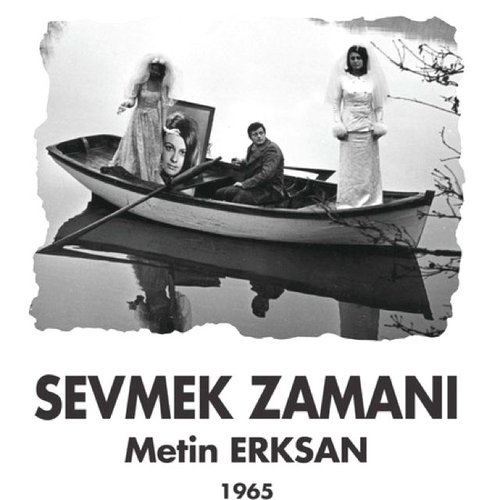
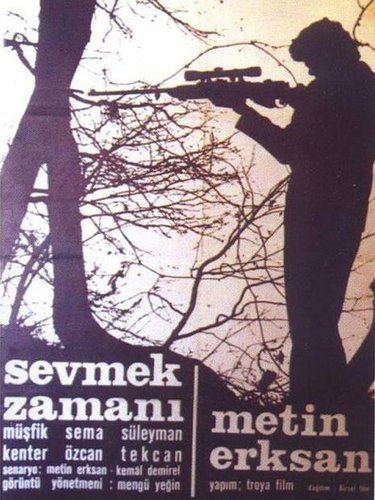
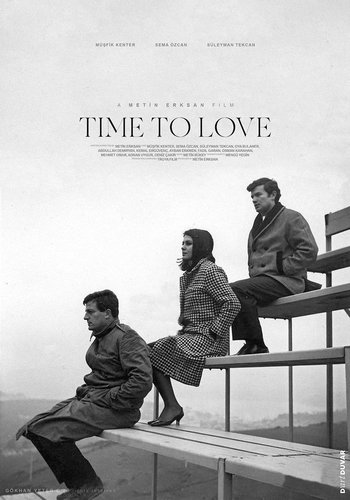
Metin Erksan directed, wrote and produced Sevmek Zamanı (Time to Love), a 1965 Turkish drama. Its theme is falling in love with an image. The 86-minute film is counted among the most original and important works of Turkish cinema, and is described as a moving, melancholy film thanks to its inventive premise and the psychological analysis it draws on, and is also called a hidden treasure of the country's cinema. The film was restored in 4K with the help of MUBI in 2022, the tenth anniversary year of Erksan's death.

The story is set in villas on the Princes' Islands of Istanbul. Halil, who works as a house painter with his master, sees a woman's portrait on the wall of a villa where he is working and loses his heart to it. He returns to the empty house again and again just to look at the picture. One day Meral, the woman in the portrait, turns up, and when she learns that a man has fallen for her likeness she is deeply moved; she thinks Halil is special and that something may grow between them. But what binds Halil is her image, not Meral herself.

Müşfik Kenter plays Halil and Sema Özcan plays Meral, with Fadıl Garan also in the cast.

DirectorMetin Erksan
Time to Love (Sevmek Zamanı) Time to Love (Sevmek Zamanı)

Reactions

You can pick up to 3 reactions.

Cast
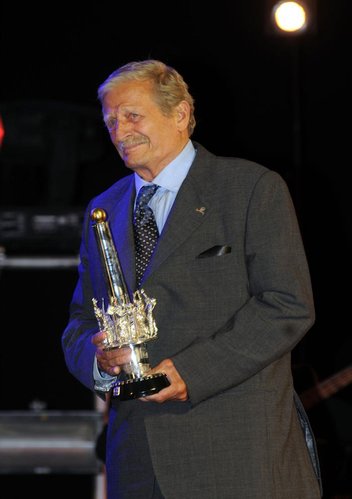
Müşfik Kenter Müşfik Kenter Actor · died at 79 Sema Özcan Süleyman Tekcan Fadıl Garan Adnan Uygur Deniz Çakır Kemal Ergüvenç Oya Bulaner Hayri Esen Ayban Erkmen Abdullah Demiryan Osman Karahan Mehmet Omar

Through different eyes

Yeşilçam Nostalgic A viewer raised on the classics, looking for warm storytelling and strong acting.

Sevmek Zamanı stands far from the Yeşilçam love films built on tears and reunions. Metin Erksan tells of loving an image, of longing for love more than love itself, so the film reads less like a familiar melodrama than like a poem. The empty villas of the Princes' Islands, the portrait on the wall and Halil returning to it again and again form an unforgettable image of sorrow. Viewers looking for classic Yeşilçam warmth may find this cool melancholy strange at first. The 2022 4K restoration is a precious chance to bring this hidden treasure to new generations.

Cinephile Looks at script, editing and directing choices; keeps a distance from formula films.

Erksan's film is a rare and daring attempt in Turkish cinema to make falling in love with an image its subject. The real subtlety lies in building the story as the reverse of a classic romance: when Meral herself appears, the conflict does not resolve but deepens, because what binds Halil is not the woman but her likeness. The idea can also be read as a comment on cinema itself, the distance between our attachment to the image on the screen and reality. That Erksan produced the film as well as writing and directing it explains how such a personal choice was possible. My reservation is about pace: the film does not open itself easily to an impatient eye and may feel static in places to today's audience. Even so, it richly deserves its rediscovery through the 4K restoration.

History & Society Lens Asks about the period, the social background and what the work reflects.

The class gap in the background works quietly beneath the love theme: Halil, a house painter working with his master, and Meral, whose portrait hangs on the wall of one of the villas on the Princes' Islands. To my mind, Halil's attachment to the portrait rather than the real woman also suggests a social distance in which the unreachable can only be possessed as an image. The empty villas become the meeting ground between the world of those who own such houses and the workers who labour in them. Erksan does not present this as a thesis; it stays embedded in the texture of the love story. Read this way, the film says more than a private melancholy.

These are not reader reviews: they are short editorial takes written from different viewer perspectives with AI assistance. Reader reviews are below.

Reviews (0)

Log in Log in to write a review.

Comments