The Imam

The Imam

Movie · 2005 · 7 people

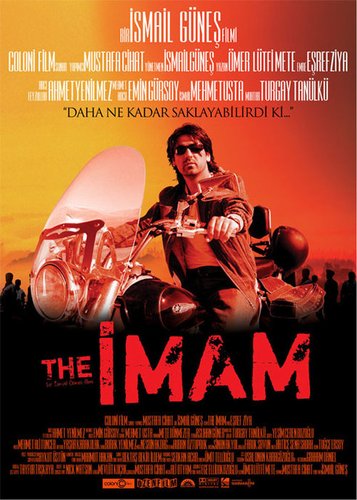
İsmail Güneş directed the 2005 Turkish drama The İmam, from a screenplay by Ömer Lütfi Mete. It opened on October 14, 2005, and runs about 110 minutes. Eşref Ziya Terzi has the lead role, while one listing names Mete Dönmezer, Turgay Tanülkü and Ahmet Yenilmez.

The hero, Emre, is really called Emrullah and is a graduate of an Imam-Hatip religious high school. He became a computer engineer, adopted a Western lifestyle and even changed his name, hiding his origins even from his business partner. With his long hair and motorcycle he gives no outward impression of being devout. Yet the religious education he received young has become an inseparable part of him, and he is too confused to admit even to himself that the opposite is true. Contradiction, restlessness and crises fill his life.

The director offers this character as a kind of middle way. Religious viewers might find his long hair and motorcycle odd, secular ones his Imam-Hatip past, yet Emre seems a figure who could bring the two halves of society to an understanding. The film shows a man hiding his identity to build a modern life yet unable to leave his upbringing behind. Some critics found it predictable and clichéd.

Directorİsmail Güneş

Reactions

You can pick up to 3 reactions.

Cast

Through different eyes

History & Society Lens Asks about the period, the social background and what the work reflects.

Through a computer engineer who hides his Imam-Hatip background and has built a Western lifestyle, The İmam moves the divide between Turkey's religious and secular camps inside a single person. Emre is a figure whose long hair and motorcycle might seem strange to one side and his Imam-Hatip past to the other; the director offers him as a middle way between the two. That is an idea that boldly picks up questions society was debating about itself in the mid-2000s. Yet reducing identity to outward markers like hair, a motorbike or a school also risks oversimplifying the issue. The film can be read as a document of one period's anxiety about polarization and its search for reconciliation.

Cinephile Looks at script, editing and directing choices; keeps a distance from formula films.

The film's problem is that it turns its lead character into a thesis rather than a person. Once Emre is designed as a figure who could reconcile the two halves of society, his inner conflict stops being a dramatic process and becomes an illustration of an idea. Outward markers such as long hair, a motorcycle and a changed name take on the work the script should be doing with the character's inner world. Portraying a life full of contradiction, restlessness and crises is an ambitious goal, but some critics finding the film predictable and clichéd is, in my view, the natural outcome of this design. Ömer Lütfi Mete's script catches an important question, but because it knows its answer from the start, it struggles to build tension.

Family Viewer Asks whether the whole household can watch it; cares about humor and heart.

The story as described gives no sign of violence or harsh scenes; the real subject is identity, faith and hiding who you are. For young children it may feel too talky and heavy. Suitable for teenagers and adults. A good occasion to watch with young people and then talk about making peace with where you come from and not hiding yourself from others.

These are not reader reviews: they are short editorial takes written from different viewer perspectives with AI assistance. Reader reviews are below.

Reviews (0)

Log in Log in to write a review.

Comments