The Seventh Juror

The Seventh Juror (Le Septième Juré)

Movie · 1962 · 4 people

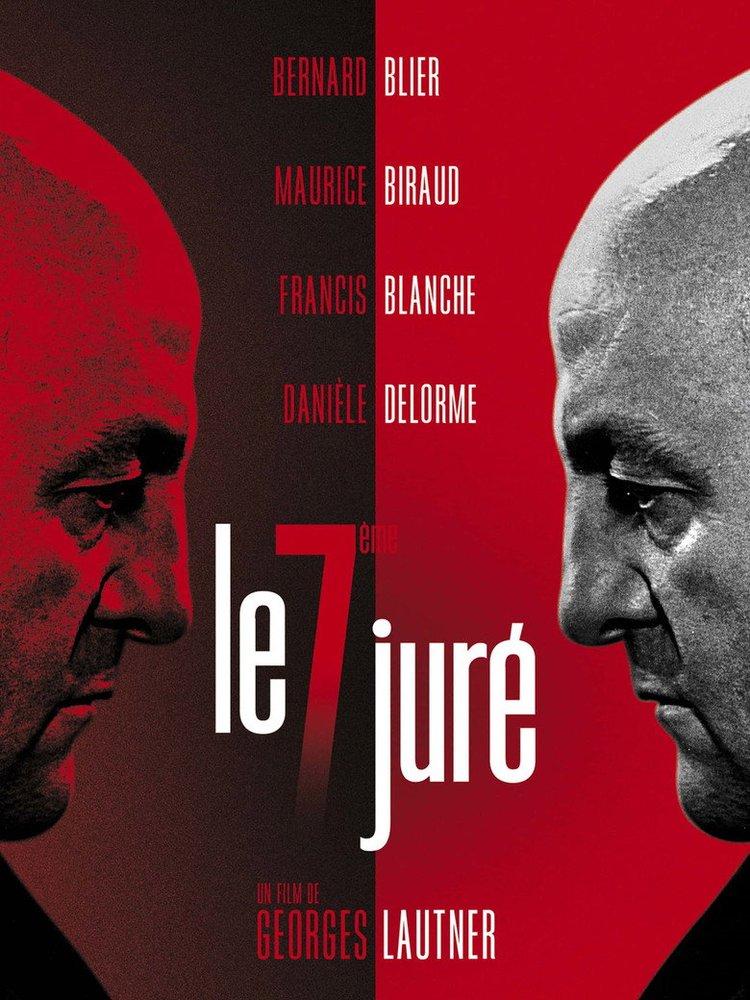
The Seventh Juror (Le Septième Juré) was made in black and white in 1962 as a French crime drama and courtroom film. Georges Lautner directed it from a screenplay by Pierre Laroche and Jacques Robert. It is based on Francis Didelot's novel of the same name, published by Fayard in 1958. Bernard Blier, Maurice Biraud, Francis Blanche and Danièle Delorme star, with Albert Rémy, Henri Crémieux, Robert Dalban and Jacques Monod also in the cast. The film runs about ninety-five minutes and sold 1,171,911 tickets in France.

The story is built around a man who kills a young woman. Her boyfriend is wrongly accused of the murder and brought to trial. By chance, the real killer is chosen as one of the jurors in the case. He does not want an innocent man convicted, yet he is caught between his own guilt and his conscience. The film therefore combines courtroom tension with a reckoning of conscience.

In French criticism the film is described as a study of manners, set among the respected notables of a provincial town. Principal photography ran from 14 November to 23 December 1961, so some sources date the film to 1961 instead.

DirectorGeorges Lautner

Reactions

You can pick up to 3 reactions.

Cast

Only cast members with a profile on this site are listed.

Through different eyes

Cinephile Looks at script, editing and directing choices; keeps a distance from formula films.

Georges Lautner's The Seventh Juror has a clever premise that turns the courtroom film inside out: the real killer sits on the jury at the trial of an innocent man. This places the viewer inside the guilty man's awareness from the outset; the tension comes not from who did it but from how a conscience will work. The black-and-white photography gives a cool distance that suits this study of manners among a provincial town's notables. With a story this inward-looking, the weight falls on the performances of a cast led by Bernard Blier, Maurice Biraud, Francis Blanche and Danièle Delorme. The back-and-forth between courtroom and conscience risks repetition at times, but a running time of about ninety-five minutes keeps that in check.

History & Society Lens Asks about the period, the social background and what the work reflects.

The film seems to be less about a murder than about a milieu: it is what French critics call a study of manners, looking at the world of people who appear respectable in a provincial town. Having the real culprit sit in the jury box poses, very plainly, the question of whom a society entrusts with judgement. That the blame falls on the innocent boyfriend invites thought about how respectability and suspicion are handed out. For anyone curious about provincial France in the early sixties it works as an interesting document, and selling over a million tickets in France suggests these concerns struck a chord with its own audience.

Yeşilçam Nostalgic A viewer raised on the classics, looking for warm storytelling and strong acting.

A black-and-white French courtroom drama always has a literary flavour for a viewer raised on the classics, and The Seventh Juror is a conscience-centred story that feels like it came from a novel, as indeed it did. A guilty man who cannot bear to see an innocent one punished is what I love most in old-fashioned moral drama. Still, this is not a warm film; its gaze on a provincial town's respectable circles is cool and pointed, choosing to unsettle rather than to comfort. Don't expect the floods of tears of Yeşilçam's conscience dramas. Worthwhile for a thoughtful evening, but anyone hoping for an emotional embrace may be disappointed.

These are not reader reviews: they are short editorial takes written from different viewer perspectives with AI assistance. Reader reviews are below.

Reviews (0)

Log in Log in to write a review.

Comments