Umut Üzümleri

Grapes of Hope (Umut Üzümleri) (translated)

Movie · 2013 · 8 people

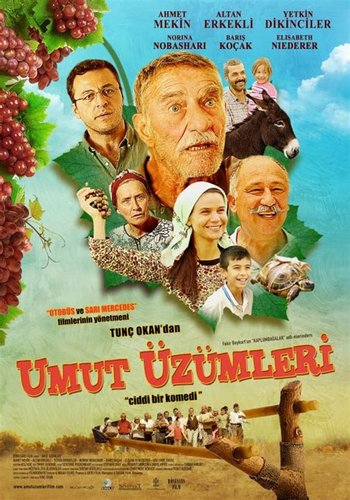
Tunç Okan wrote, directed and produced the drama-comedy Umut Üzümleri (Grapes of Hope). A co-production of Turkey, Switzerland, Germany and France, it is adapted from a work by Fakir Baykurt and runs 126 minutes. Rönesans Film made it; it was shown at the 2012 Golden Orange Film Festival and released on 17 May 2013 through distributor Medyavizyon. Because it weaves comedy into drama, it has been called "a very serious comedy".

The story is set in Tozak, a small village in Central Anatolia. To revive their barren land the villagers started an irrigation project, mortgaging their fields to a wealthy merchant to pay for it. When the debt cannot be repaid, the merchant wants to build a new settlement on the land. Just then a newly assigned teacher arrives; together with the village headman he leads the villagers, and a great struggle begins to save their land. Yetkin Dikinciler plays the teacher Ozan, with Ahmet Mekin, Barış Koçak, Altan Erkekli, Norina Nobashari, Aziz Emre Yavuz and Ümit Şilit also in the cast. The villagers' way out is the idea of planting vineyards.

The cinematographer is Vedat Özdemir. Mehmet Andiçen and Barış Aryay are credited for the music, and the song "Umudun Şarkısı", built on a well-known Crimean Tatar song, is performed by Nilüfer.

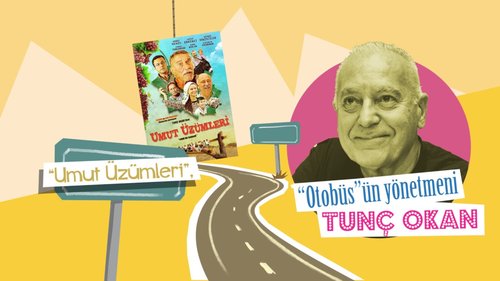
DirectorTunç Okan
Production companyRönesans Film
Grapes of Hope (Umut Üzümleri) Grapes of Hope (Umut Üzümleri) Grapes of Hope (Umut Üzümleri)

Reactions

You can pick up to 3 reactions.

Cast

Through different eyes

History & Society Lens Asks about the period, the social background and what the work reflects.

Being a Fakir Baykurt adaptation ties the film straight to the Turkish village-literature tradition: land, debt, the teacher and the villagers' shared struggle. An irrigation project meant to revive barren land that ends in mortgages and a debt to a merchant is a strong frame for showing how rural development hopes can turn into dependency. The teacher leading the villagers alongside the headman recalls the classic narrative pattern that casts the village teacher as the carrier of change. Today's viewers may find that template a little old-fashioned, but losing land to debt and seeing it turned into a new settlement remain current concerns.

Cinephile Looks at script, editing and directing choices; keeps a distance from formula films.

The film's biggest test is the tone it chose for itself. The description "a very serious comedy" captures a structure in which drama and humour try to stand side by side, but the balance does not always hold. Comic moments dropped into a serious fight for land sometimes defuse the tension, and the storytelling at times runs longer than it needs to. The music, on the other hand, gives the film a warm identity: "Umudun Şarkısı", built on a well-known Crimean Tatar song and sung by Nilüfer, carries the theme of hope without a word. Flawed, but a sincere and carefully made adaptation.

Family Viewer Asks whether the whole household can watch it; cares about humour and heart.

Built on village life, solidarity and hope, this is a film the family can watch together. Because it is about debt and losing land, young children may find it a bit heavy and long. With middle- and high-school kids, though, it is a good opening to talk about hard work, standing together and village life. Older relatives who know village life will find a lot that feels familiar.

These are not reader reviews: they are short editorial takes written from different viewer perspectives with AI assistance. Reader reviews are below.

Reviews (0)

Log in Log in to write a review.

Comments