Egg (Yumurta)

Egg (Yumurta)

Movie · 2007 · 7 people

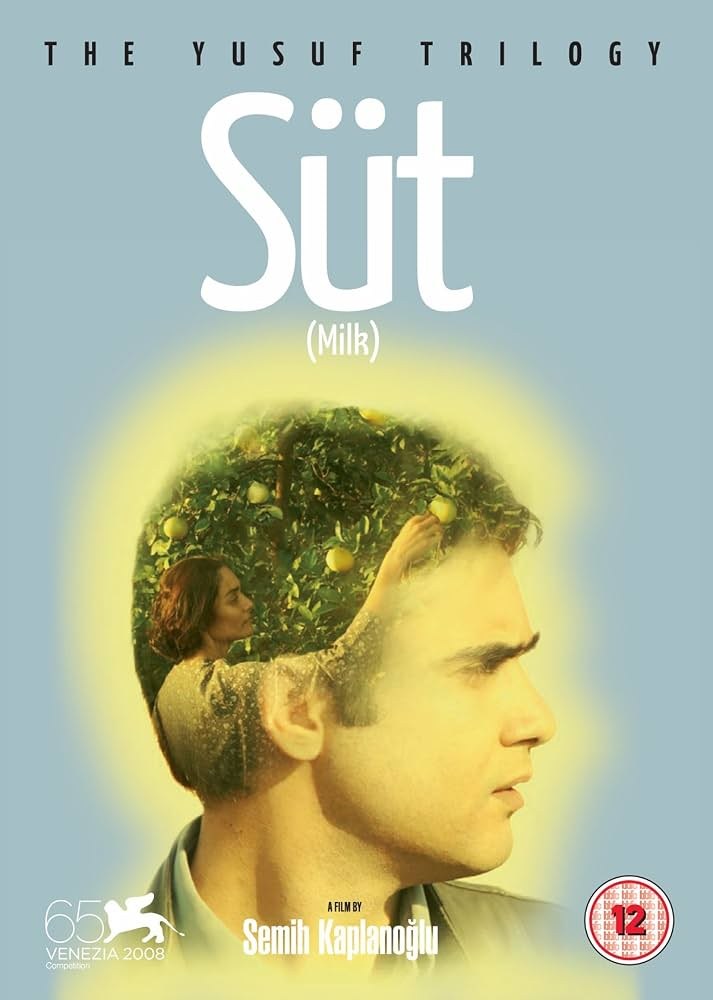
Semih Kaplanoğlu directed Yumurta (Egg) in 2007, a 93-minute drama and Turkish-Greek co-production. It opens the Yusuf Trilogy, which follows the poet Yusuf through three stages of life, though the films were made and released in reverse order: Egg shows him in later adulthood, while the closing chapter, Honey, returns to his childhood, with Milk between them. It played in the Directors' Fortnight at the 60th Cannes Film Festival and reached Turkish cinemas on November 9, 2007.

Yusuf left his small hometown for Istanbul fifteen years earlier. Caught between city and provinces and in an identity crisis, he has written a book of poems that nobody but himself cares about. News of a death sends him home to bury his mother, and there he finds far more than he went looking for. Nejat İşler plays Yusuf and Saadet Işıl Aksoy takes the other leading part, with Ufuk Bayraktar, Cengiz Bozkurt, Tülin Özen and Gülçin Santırcıoğlu.

Kaplanoğlu wrote the screenplay with Orçun Köksal for Kaplan Film Production and Inkas Film Production, shooting the hometown scenes in Tire, İzmir. Turkish critics placed it in the line of minimalist, philosophical small-town films begun by Nuri Bilge Ceylan's Kasaba and Mayıs Sıkıntısı and continued by Reha Erdem's Beş Vakit.

DirectorSemih Kaplanoğlu
Production companyKaplan Film Production

Reactions

You can pick up to 3 reactions.

Cast

Through different eyes

Cinephile Looks at script, editing and directing choices; keeps a distance from formula films.

Egg opens Semih Kaplanoğlu's Yusuf Trilogy and tells the story in reverse: we meet Yusuf first in later adulthood, while Milk and Honey step back towards childhood. That structural choice is intriguing in itself. Critics were right to place the film in the minimalist, philosophical small-town line of Nuri Bilge Ceylan's Kasaba and Mayıs Sıkıntısı and Reha Erdem's Beş Vakit. Nejat İşler shapes a figure who carries Yusuf's withdrawn identity crisis. But this style is not open to every viewer: the silence of minimalism at times leaves the narrative sinking under its own weight. Its selection for the Directors' Fortnight at Cannes shows that its film language was taken seriously.

History & Society Lens Asks about the period, the social background and what the work reflects.

Egg is really about Yusuf, who left his small hometown for Istanbul fifteen years ago, hanging between two worlds. A poet in an identity crisis, caught between city and provinces, stands for a rupture many people in Turkey know well. Going home to bury his mother means facing again the family ties and local life he left behind. The hometown scenes, shot in Tire, strengthen the film's sense of place. Kaplanoğlu chooses to make us think about migration, belonging and return to one's roots without grand statements; yet this indirect approach may feel too closed to viewers who want a clearer social frame.

Family Viewer Asks whether the whole household can watch it; cares about humor and heart.

Egg is a calm, slow-paced film. It follows a man going back to his hometown to bury his mother, with grown-up themes such as grief and questions of identity. For children it is both slow and hard to follow. Even teenagers may get bored. It suits adults who like quiet, thoughtful films, but not anyone looking for weekend family entertainment.

These are not reader reviews: they are short editorial takes written from different viewer perspectives with AI assistance. Reader reviews are below.

Reviews (0)

Log in Log in to write a review.

Comments