Love Is Red (Aşk Kırmızı)

Love Is Red (Aşk Kırmızı)

Movie · 2013 · 8 people

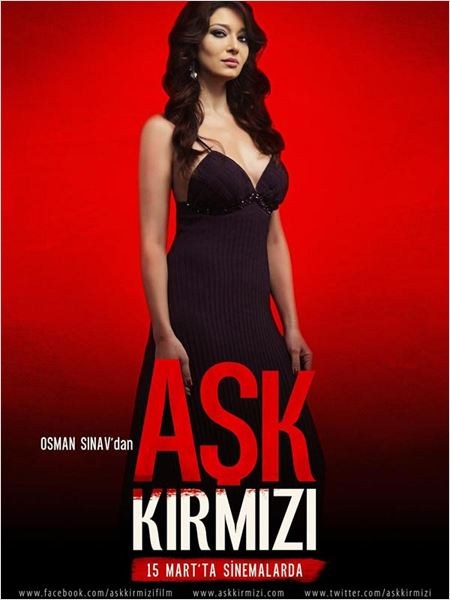
Osman Sınav wrote and directed Aşk Kırmızı ("Love Is Red"), a Turkish drama and romance from 2013. It opened in cinemas on March 15, 2013, and is built around the question "can there be love between three people?" Sınav has worked in the industry since the early 1980s and is best known for successful television series.

Ferhat and Zeynep appear, from the outside, to share a happy marriage, until Nazlıgül, the first love Ferhat left behind years ago, comes back into their lives. Ferhat and Nazlıgül cannot resist each other, and Zeynep learns she has been betrayed and asks whether she could ever share the husband she loves with another woman. In a triangle where everyone is in some way innocent, the affection Zeynep and Nazlıgül feel for each other makes the usual answers about loyalty and rivalry look less certain. Nurgül Yeşilçay, Tayanç Ayaydın and Ezgi Asaroğlu play the leads, with Teoman Kumbaracıbaşı, Sait Genay, Şebnem Dilligil, Renan Karagözoğlu and Ayda Aksel in the cast.

Reaction on release was lukewarm at best: press and audience ratings stayed low, and critics aimed most of their objections at the screenplay, calling it a film that reminds viewers how much a script matters. It runs one hour fifty-four minutes.

DirectorOsman Sınav
Love Is Red (Aşk Kırmızı) Love Is Red (Aşk Kırmızı)

Reactions

You can pick up to 3 reactions.

Cast

Also in the cast: Renan Karagözoğlu
Through different eyes

Cinephile Looks at script, editing and directing choices; keeps a distance from formula films.

On paper, Aşk Kırmızı starts from a bold question: can there be love between three people? Having Zeynep and Nazlıgül come to care for each other instead of becoming rivals is an idea that could genuinely move the familiar betrayal drama somewhere new, and Osman Sınav's proven storytelling on television raises expectations. It is no accident, though, that critics aimed most of their objections at the screenplay: a good question cannot carry a film without a solid structure that deepens it scene by scene. A triangle in which everyone is in some way innocent only stays gripping if the conflict is built convincingly. Nurgül Yeşilçay, Tayanç Ayaydın and Ezgi Asaroğlu try to shoulder that weight, but at one hour fifty-four minutes, every gap in a weak dramatic frame becomes easier to see.

Family Viewer Asks whether the whole household can watch it; cares about humor and heart.

This one is not for children. At its heart are betrayal, jealousy in a marriage and the question of whether a woman could share her husband with another woman. For younger viewers that theme is both heavy and hard to follow. Adults who want to watch it together and talk it over afterwards may find it suits them. Anyone hoping for comedy or light entertainment should pick something else; here, emotion takes over.

History & Society Lens Asks about the period, the social background and what the work reflects.

What makes Aşk Kırmızı interesting is that it dares to ask openly about "love between three people" in a society that treats monogamy as almost beyond question. The film does not cast the betrayed wife only as a victim or the returning first love only as a threat; the closeness between Zeynep and Nazlıgül questions the familiar pattern that sets women up as rivals. In 2013 that was not an easy proposition for a broad Turkish audience to accept. Blaming the low press and audience ratings solely on the script may miss part of the picture; the subject itself arguably clashed with settled expectations about loyalty and family.

These are not reader reviews: they are short editorial takes written from different viewer perspectives with AI assistance. Reader reviews are below.

Reviews (0)

Log in Log in to write a review.

Comments