Dalgaları Aşmak

Breaking the Waves

Movie · 1996 · 15 people

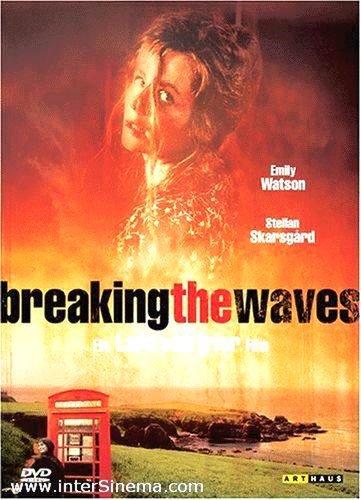
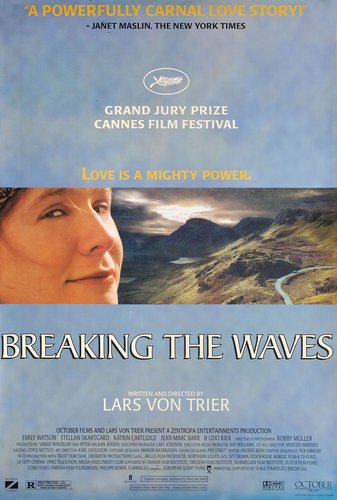
Lars von Trier wrote Breaking the Waves (Dalgaları Aşmak in Turkish) with Peter Asmussen and directed this 1996 romantic drama himself. As his first film after founding Dogme 95, it is heavily influenced by that movement's style, though it breaks several of its rules. Produced by Zentropa, it opens von Trier's Golden Heart trilogy, followed by The Idiots (1998) and Dancer in the Dark (2000). It premiered at Cannes on 18 May 1996, where it won the Grand Prix, and reached Danish cinemas on 5 July 1996.

The story is set in the Scottish Highlands in the early 1970s. Bess McNeill (Emily Watson), naive and devout, marries Jan (Stellan Skarsgård), an oil rig worker. After an accident leaves Jan paralysed, Bess prays for his return and feels guilty, and an unusual demand from Jan tests what she believes about love, faith and the will of God. Katrin Cartlidge plays Dodo McNeill and Jean-Marc Barr plays Terry, with Udo Kier also in the film. It has seven chapters and an epilogue.

Watson, in her first film role, earned her first Oscar nomination, and her performance won unanimous praise. The film also won the César for Best Foreign Film and the European Film Award for Best Film.

DirectorLars von Trier
Production companyZentropa
Breaking the Waves Breaking the Waves

Reactions

You can pick up to 3 reactions.

Cast

Only cast members with a profile on this site are listed.

Jean-Marc Barr Jean-Marc Barr Actor · 66 years old Udo Kier Udo Kier Actor · died at 81 Emily Watson Stellan Skarsgård Katrin Cartlidge Adrian Rawlins Roef Ragas Sandra Voe Gavin Mitchell Mikkel Gaup Phil McCall Robert Robertson David Bateson Callum Cuthbertson Dorte Rømer

Through different eyes

Cinephile Looks at script, editing and directing choices; keeps a distance from formula films.

A film steeped in the style and spirit of Dogme 95 that nonetheless breaks many of the manifesto's rules; the contradiction suggests von Trier treats even his own rules as raw material rather than limits. Built as seven chapters and an epilogue, it presents melodrama with an almost literary distance. That Emily Watson earned an Oscar nomination in her first film role, to unanimous praise, is no surprise: the film rests most of its weight on her shoulders. Yet that same intensity makes its view of suffering contentious. For some it is a tragedy of faith; for others it is a construction that aestheticises its heroine's pain. The Cannes Grand Prix was deserved, and so is the unease it provokes.

History & Society Lens Asks about the period, the social background and what the work reflects.

The early-1970s community of the Scottish Highlands where the story unfolds is a quiet but decisive character in its own right. A naive, devout young woman marrying a man who works on an oil rig also exposes the distance between the church and the modern world of work. Bess, caught between her convictions about love, faith and the will of God, raises the question of how an individual conscience squares with the values it was raised on. Rather than mounting a direct critique of religion, the film examines faith in a lonely, extreme form, which is why it resists easy readings. Rich material for viewers interested in the roles a society assigns to people, though too ambiguous for anyone looking for a thesis.

Family Viewer Asks whether the whole household can watch it; cares about humour and heart.

This is not one to watch with children. It deals with very heavy subjects: a husband left paralysed, guilt, and a strange demand that puts faith to the test. It may be a powerful drama for adults, but it is the wrong choice for a family evening. Even teenagers may find the weight of it hard going. If you want something the whole family can watch, pick another film and leave this one for the grown-ups.

These are not reader reviews: they are short editorial takes written from different viewer perspectives with AI assistance. Reader reviews are below.

Reviews (0)

Log in Log in to write a review.

Comments