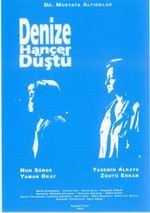
A Dagger Fell into the Sea (Denize Hançer Düştü)

A Dagger Fell into the Sea (Denize Hançer Düştü) (translated)

Movie · 1992 · 6 people

Denize Hançer Düştü (the title means "a dagger fell into the sea") is the first feature film of Mustafa Altıoklar, made in 1992. Altıoklar directed and produced it and wrote the screenplay with Yasemin Altıoklar and Zühtü Erkan. The 90-minute color film, shot on 35 mm, was produced by Negatif Film. Sitting between drama, epic and experimental modes, it is notable for how stage and everyday life run into each other.

The story follows two actresses who work together in the theater, Deniz and İpek. What happens during the rehearsals and staging of Jean Genet's The Balcony becomes entangled, as in the play itself, with love and lovelessness, desire, sexuality and the passion for power. The cast includes Yasemin Alkaya, Nur Sürer, Zühtü Erkan and Meral Çetinkaya, along with Levent Can, Şoray Uzun, Negehan Dilpak and Ahmet Fuat Onan. Yaman Okay plays the director of the play and Samim Meriç the landlord; Nur Sürer's voice was dubbed by Arsen Gürzap.

Uğur İçbak was the cinematographer, Mete Sakpınar composed the music and Hilmi Güver edited. The film came back from festivals with awards: Altıoklar was named Promising New Director at the 5th Ankara Film Festival in 1993, and İçbak won Best Cinematographer at the 29th Golden Orange Film Festival.

DirectorMustafa Altıoklar
Production companyNegatif Film

Reactions

You can pick up to 3 reactions.

Cast
Also in the cast: Ahmet Fuat Onan, Negehan Dilpak, Samim Meriç (Landlord)

Through different eyes

Yeşilçam Nostalgic A viewer raised on the classics, looking for warm storytelling and strong acting.

Denize Hançer Düştü is not an easy film for an eye used to the warm, direct storytelling of Yeşilçam. It builds an experimental structure in which stage and life intertwine, inviting the viewer to think rather than to form an emotional bond with the characters. Those looking for the sincerity of the old films may struggle to find it here. Even so, it is impossible not to respect a first film that approaches theater, a writer like Jean Genet and the craft of acting so seriously. A doorway for anyone curious about what Turkish cinema was searching for after Yeşilçam.

Cinephile Looks at script, editing and directing choices; keeps a distance from formula films.

Mustafa Altıoklar's first film uses Jean Genet's The Balcony not just as a backdrop but as a mirror that shapes its own structure: the power and desire discussed in rehearsal seep into what happens offstage. This nested construction is a bold experiment for Turkish cinema of the early 1990s. Uğur İçbak's Best Cinematographer award at the Golden Orange confirms the film's visual ambition. But a structure that shifts between dramatic, epic and experimental modes turns inward at times, and for a viewer who does not know Genet the references can feel heavy. For all its flaws, an ambitious debut that earned its Promising New Director award in Ankara.

History & Society Lens Asks about the period, the social background and what the work reflects.

The film looks at the world of theater through the eyes of two actresses and treats it as a field of power. The love, lovelessness, sexuality and lust for power in Genet's play spill over into the relationships offstage, suggesting that the art world, too, is a small society with its own hierarchies and power games. A Turkish film openly addressing sexuality and power in the early 1990s shows that the cinema of the time was looking for a new language. On the other hand, in my view the film's interest lies not in society but in the relationships within the four walls of the stage; those hoping to see the era itself may find that limiting.

These are not reader reviews: they are short editorial takes written from different viewer perspectives with AI assistance. Reader reviews are below.

Reviews (0)

Log in Log in to write a review.

Comments