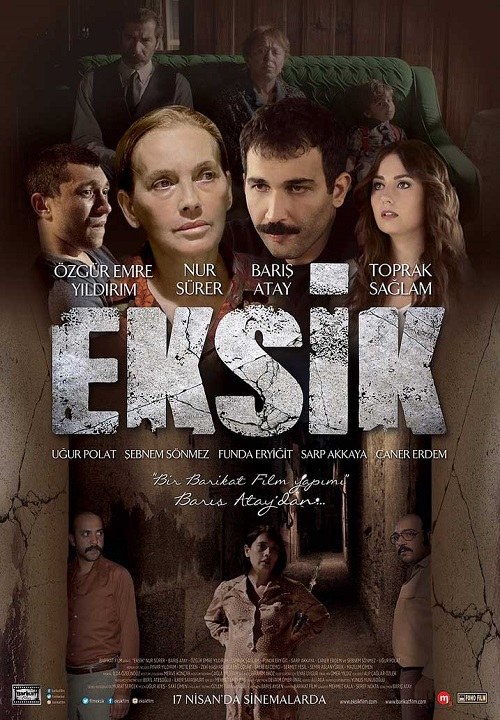
The Other Side of the Water (Suyun Öte Yanı)

The Other Side of the Water (Suyun Öte Yanı) (translated)

Movie · 1991 · 7 people

Tomris Giritlioğlu directed Suyun Öte Yanı (The Other Side of the Water) in 1991, a Turkish film in the drama and political-film genres. TRT produced it from a screenplay by Feride Çiçekoğlu. It runs 88 minutes. Çiçekoğlu's novel of the same name followed the film in 1992, published by Can Yayınları, and the film was screened again at the 11th Flying Broom International Women's Film Festival on May 8, 2008.

The story is set in the early 1980s, when people were jailed for their political views, on Cunda Island off Ayvalık. Ertan, a university lecturer released to stand trial without detention, comes to the island on holiday with Nihal, the woman he loves. The guesthouse where they stay is run by a woman who moved there from Crete in 1924, and the closeness that grows between them turns the narrative into a journey into the past. When the trial ends in a prison sentence, Ertan comes back to Cunda years later, alone this time.

Nur Sürer and Uğur Polat lead the cast, with Halil Ergün, Selçuk Yöntem, Meral Çetinkaya, Pıtırcık Akerman, Oktay Kaynarca and Mehmet Günsür. Meral Babacan Erbil produced, Orhan Oğuz was director of photography, Bilge Can edited, and the music is by Yeni Türkü. Zeki Demirkubuz is credited as an assistant director.

DirectorTomris Giritlioğlu
Production companyTRT

Reactions

You can pick up to 3 reactions.

Cast
Also in the cast: Pıtırcık Akerman

Through different eyes

History & Society Lens Asks about the period, the social background and what the work reflects.

Suyun Öte Yanı sets the early 1980s, when people were jailed for their political views, against the calm of Cunda Island. The film places two historical layers side by side: the pressure on a university lecturer on trial while free pending verdict, and the past carried by a woman who moved from Crete to the island in 1924. The pairing invites reflection on how migration and political repression leave marks across generations. That a TRT production approached this subject, with a woman directing and a woman writing, is notable for its time. The storytelling leans too heavily on symbols in places, but it manages to portray a hard period without raising its voice.

Cinephile Looks at script, editing and directing choices; keeps a distance from formula films.

In this 88-minute film Tomris Giritlioğlu builds a structure that moves back and forth between two periods, and that choice is both its strength and its weakness. Feride Çiçekoğlu's script avoids showing political repression head-on, conveying it instead through the island's atmosphere and the quiet closeness between characters, and Orhan Oğuz's camerawork uses Cunda in tune with that mood. The time jumps, however, sometimes break the emotional continuity, and viewers may struggle to keep track of whose past they are watching. The restrained performances of Nur Sürer and Uğur Polat carry the film, while Yeni Türkü's music adds a warm tone. Not flawless, but as an early-1990s attempt to make political cinema in a poetic register, it deserves attention.

Family Viewer Asks whether the whole household can watch it; cares about humor and heart.

A heavy, thought-provoking film about people tried for their political views, a court case and a prison sentence. Not suitable for young children; neither the subject nor the pace is for them. But it's a good chance to watch with high school or university-age kids and talk about the 1980s. The beauty of Cunda Island gives it a peaceful feel. A meaningful evening film for grown-ups.

These are not reader reviews: they are short editorial takes written from different viewer perspectives with AI assistance. Reader reviews are below.

Reviews (0)

Log in Log in to write a review.

Comments