Pains of Autumn (Güz Sancısı)

Pains of Autumn (Güz Sancısı)

Movie · 2009 · 16 people

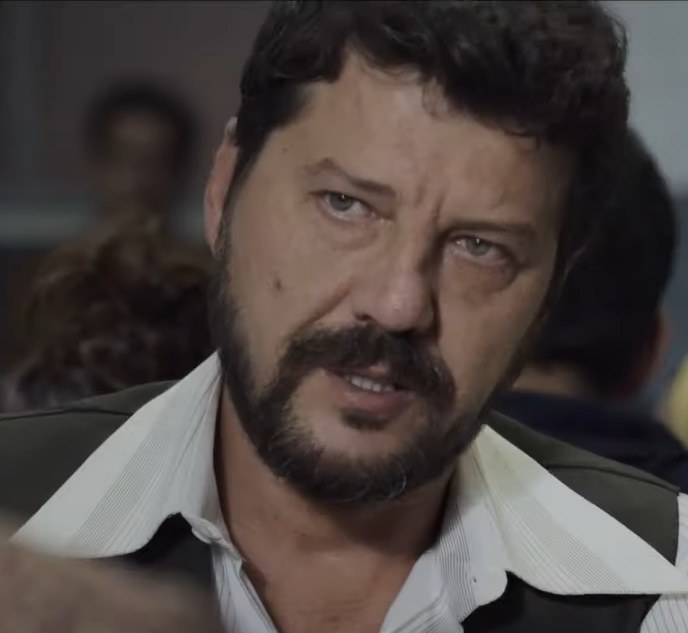
Tomris Giritlioğlu directed Güz Sancısı (Pains of Autumn), a Turkish drama drawn from Yılmaz Karakoyunlu's novel and set amid the political tension of the 1950s. Released across the whole of Turkey on January 23, 2009, it ranked among the year's top-earning Turkish films. It is regarded as a continuation of Suyun Öte Yanı and especially of Salkım Hanımın Taneleri, and its subject, the September 6–7 events, provoked intense debate.

The story begins as autumn 1955 approaches, as a tense political climate casts its shadow over Beyoğlu. Behçet (Murat Yıldırım), a law faculty assistant, is drawn toward marginal ideas by his father's influence and upbringing. The only thing that makes him stumble is Elena (Beren Saat), a young non-Muslim woman he secretly watches from the window opposite. Their love tries to defend itself amid a political wave aimed at non-Muslims, and the further Behçet goes down his path, the further he moves from Elena and from love.

The screenplay is by Nilgün Öneş, Etyen Mahçupyan, Tayfun Pirselimoğlu and Ali Ulvi Hünkar; Bahadır Atay and Fatih Enes Ömeroğlu produced. Music is by Tamer Çıray. It runs 112 minutes.

DirectorTomris Giritlioğlu
Pains of Autumn (Güz Sancısı)

Reactions

You can pick up to 3 reactions.

Cast

Through different eyes

History & Society Lens Asks about the period, the social background and what the work reflects.

Güz Sancısı approaches the September 6–7, 1955, events, a real rupture that targeted Istanbul's non-Muslim residents, through a love story set in Beyoğlu. Its greatest strength is bringing a vast historical event down to the windows of an ordinary apartment block: the pull between the ideas Behçet inherited from his father and his feelings for Elena turns the social climate of the time into a personal test. Being seen as a continuation of Salkım Hanımın Taneleri makes sense too; Giritlioğlu keeps working the same seam of collective memory. Still, the romance sometimes works like a curtain that softens the weight of history, and viewers curious about the background will want to keep reading once the film is over.

Cinephile Looks at script, editing and directing choices; keeps a distance from formula films.

Tomris Giritlioğlu builds Yılmaz Karakoyunlu's novel as a period melodrama, and that choice is both the film's strength and its limit. The contrast between Beyoğlu's glitter and the political shadow falling over it becomes a striking atmosphere in Ercan Yılmaz's images, and the motif of secretly watching from the window opposite is a strong visual idea. Yet the four-person writing team shows: Behçet's inner shift is not traced step by step, and the character sometimes turns wherever the drama needs him to. Murat Yıldırım and Beren Saat carry the emotional load of their scenes, but an intriguing subplot such as Elena's mysterious bond with her grandmother feels left half-developed. In the end, a film that tackles an ambitious subject with courage in 112 minutes, but whose dramaturgy never quite matches the weight of its theme.

Family Viewer Asks whether the whole household can watch it; cares about humor and heart.

This is not a light pick for a family evening. The subject is heavy: the 1955 attacks aimed at non-Muslims, with political tension seeping into every corner of the story. I would not choose it for young children. Watched with high-school-age teenagers, though, it is a good opening to talk about a painful page of history, and older relatives will recognize the old Beyoğlu atmosphere. Just make sure you leave time to talk afterwards.

These are not reader reviews: they are short editorial takes written from different viewer perspectives with AI assistance. Reader reviews are below.

Reviews (0)

Log in Log in to write a review.

Comments