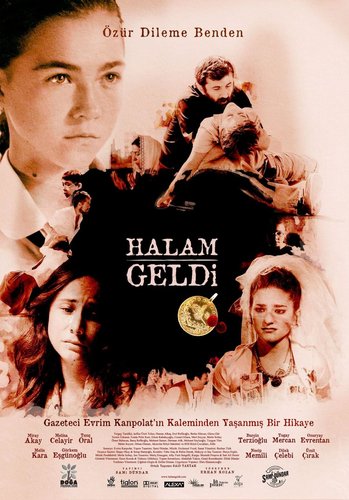
My Aunt Came (Halam Geldi)

My Aunt Came (Halam Geldi) (translated)

Movie · 2013 · 7 people

Through the daily life of a border village, the 2013 Turkish drama Halam Geldi (My Aunt Came) approaches the problem of child brides. 5. Boyut Stüdyoları made the film and Erhan Kozan directed; Sami Dündar and Atıf Ulusoy produced and Ercüment Vural wrote the music. It was first shown at a special screening at the 50th International Antalya Golden Orange Film Festival and reached cinemas on January 3, 2014. Running about 100 minutes, it was also conceived as a social responsibility project.

The story is set in Akıncılar, a village in the Turkish Republic of Northern Cyprus where church bells answer the call to prayer. Turks from Diyarbakır and Turkish Cypriots live side by side there, and across the line lies the Greek Cypriot village of Limya. Through children's eyes, the film tells the sad story of three thirteen-year-old girls from Diyarbakır, bringing together child brides, disabled children born of marriages between relatives and the border between northern and southern Cyprus. Burçin Terzioğlu plays the mother Benek, Miray Akay Reyhan, Melis Kara Oya and Necip Memili Haluk.

Journalist Evrim Kanpolat adapted the screenplay from a real incident. Reviews noted that the film begins in humor and slides into tragedy while taking on many subjects at once.

DirectorErhan Kozan
Production company5. Boyut Stüdyoları

Reactions

You can pick up to 3 reactions.

Cast

Also in the cast: Kıbrıs Türkü

Through different eyes

History & Society Lens Asks about the period, the social background and what the work reflects.

Halam Geldi takes on an urgent social problem, child brides, in Akıncılar, a border village in Cyprus where church bells answer the call to prayer. Families from Diyarbakır living alongside Turkish Cypriots bring layers of migration and identity into the story. As the sad story of three thirteen-year-old girls is told through children's eyes, the film also touches on the consequences of marriage between relatives and on the island's division. Being adapted from a real incident adds to its impact. Carrying so many issues at once, however, makes it hard for any of them to go deep, and the critics were right to point that out.

Family Viewer Asks whether the whole household can watch it; cares about humor and heart.

An important subject, but heavy for children. It is about thirteen-year-old girls being married off, and although it starts out with humor it grows steadily sadder. Watching it with teenagers, especially daughters, and talking afterwards could be worthwhile. Not suitable for young children. It was made as a social responsibility project, and its message is plain and clear.

Cinephile Looks at script, editing and directing choices; keeps a distance from formula films.

Erhan Kozan's film rests on a tonal shift, opening in humor and sliding steadily into tragedy. Handled well, that slide could have a powerful effect; here it sometimes feels abrupt and not quite earned. Child brides, disabled children born of marriages between relatives and the border question in Cyprus sit side by side in one screenplay, each heavy enough to carry a film of its own. That density leaves the characters too little room to deepen. On the other hand, a cast that includes Turkish Cypriot and Greek actors makes Akıncılar's multicultural texture convincing. Its social-responsibility purpose sometimes gets ahead of its cinematic choices, but it is a film that chose its subject with courage.

These are not reader reviews: they are short editorial takes written from different viewer perspectives with AI assistance. Reader reviews are below.

Reviews (0)

Log in Log in to write a review.

Comments