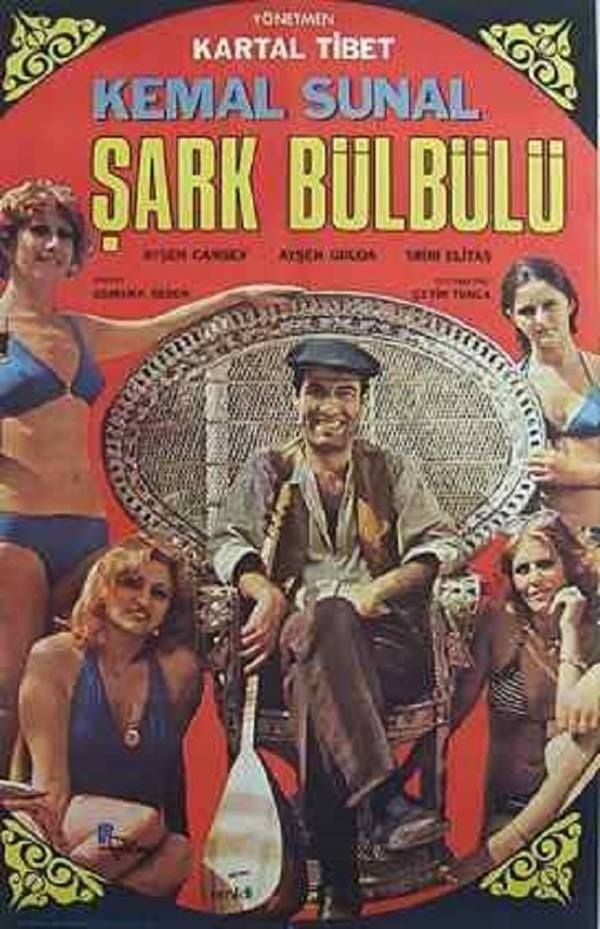
Nightingale of the East (Şark Bülbülü)

Nightingale of the East (Şark Bülbülü) (translated)

Movie · 1979 · 12 people

Kartal Tibet directed Şark Bülbülü (Nightingale of the East), a 1979 Turkish comedy. İhsan Yüce and Osman F. Seden wrote the script, Selim Soydan produced it, and it was made by Fatoş Film and Gülşah Film. It was shot in colour on 35 mm and runs 89 minutes. Kemal Sunal stars as the young man with the soulful voice of the title.

The story begins when Zülfo Ağa (Sırrı Elitaş), who lords it over his village, sets his eye on Hatice (Ayşen Cansev), who has been promised to Şaban (Kemal Sunal) since the cradle. Zülfo has Şaban driven out of the village, and with a large bride price demanded for Hatice, Şaban must go to Istanbul to raise it. In the big city he drifts from job to job until his voice makes him a famous folk singer. He returns to his village as an ağa himself and avenges what he went through. The film tells the familiar village-to-city migration story of those years through comic situations.

The cast also features Ayşen Gruda (Fethi's sister), Dinçer Çekmez (Fethi), Osman Alyanak (Haydar), Selim Naşit and Yadigar Ejder (Mazlum), İhsan Yüce (the headman), Yavuz Karakaş (Arap Cemal) and Bahri Ateş (Şıh Hazretleri).

DirectorKartal Tibet
Production companyFatoş Film, Gülşah Film

Reactions

You can pick up to 3 reactions.

Cast

Also in the cast: Selim Naşit, Yavuz Karakaş, Bahri Ateş

Through different eyes

Yeşilçam Nostalgic A viewer raised on the classics, looking for warm storytelling and strong acting.

Kemal Sunal's Şaban is, in Kartal Tibet's hands, once again a hero of that familiar innocence and stubbornness, this time a folk singer who lives through his voice. İhsan Yüce's presence both in the script and as the village headman gives the film a genuine Anatolian flavour. The story of a young man heading for the big city to win the girl promised to him since the cradle was told many times in the cinema of those years, yet Şaban's sincerity makes the familiar road warm. To my mind, the film's heart lies in the little man being in the right against the ağa. One of Yeşilçam's fine examples of comedy that makes you think.

History & Society Lens Asks about the period, the social background and what the work reflects.

The film tells the great migration story of the 1970s through comedy, but the social order in the background is serious: the power of the ağa, betrothal from the cradle and a hefty bride price standing in young people's way. For Şaban, Istanbul is both exile and opportunity; the music halls and folk-singing look like the only ladder that opens the paths closed to him in the village. To my mind the most interesting point is that the hero returns to his village as an ağa himself. The injustice gets punished, but the order itself goes unquestioned; only the person at the top changes. That says a lot about the audience's idea of justice at the time.

Family Viewer Asks whether the whole household can watch it; cares about humour and heart.

Kemal Sunal films are a shared pleasure in many homes, and this one is too: the comic situations will make children laugh too, and the folk songs will please the grandparents. A few topics need explaining, though. The bride price, the cradle betrothal and a story that resolves through revenge may seem strange to little ones. If you are ready to talk them through, it makes for a pleasant family evening with the grandparents.

These are not reader reviews: they are short editorial takes written from different viewer perspectives with AI assistance. Reader reviews are below.

Reviews (0)

Log in Log in to write a review.

Comments