Yusuf ile Kenan

Yusuf and Kenan (Yusuf ile Kenan) (translated)

Movie · 1979 · 3 people

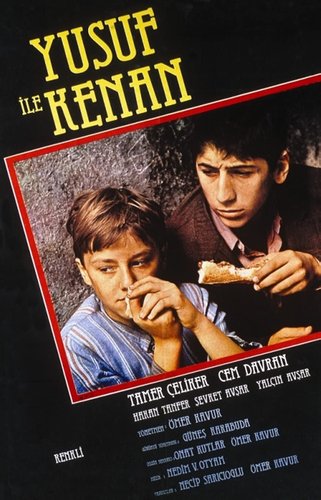
Ömer Kavur made the Turkish drama Yusuf ile Kenan (Joseph and Canaan) in 1979. It tells the story of two children pulled from society's outcasts in a plain yet effective cinematic language, a tale of alienation in the big city. Çağdaş Araştırma Grubu and Alfa Film produced it, shot in colour on 35 mm, and it premiered on 16 January 1979. Well received abroad, it won many awards, among them the grand prize of the Milan Film Festival.

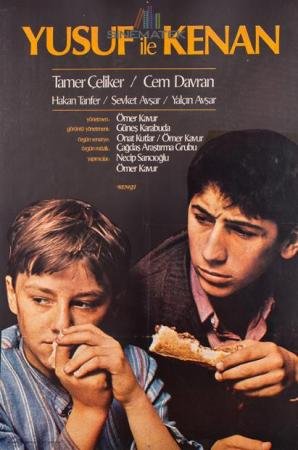
Their father killed before their eyes in a blood feud, two brothers flee to Istanbul. Despite a long search they cannot find their uncle Ali in the huge city, and after days of misery on the streets they fall in with a gang of children. The elder brother Yusuf becomes the right hand of gang leader Çarpık Kerem and gets mixed up in illegal business, while little Kenan stays on the side of honesty and tries to earn a living by honest work. Cem Davran plays Yusuf and Tamer Çeliker plays Kenan, both still children. Hakan Tanfer appears as Çarpık, Şevket Avşar as Çeto and Yalçın Avşar as Cenk/Böcek.

Kavur wrote the script with Onat Kutlar and shared the production with Necip Sarıcıoğlu. Güneş Karabuda was the cinematographer. The film runs about 80 minutes.

DirectorÖmer Kavur
Production companyÇağdaş Araştırma Grubu, Alfa Film
Yusuf and Kenan (Yusuf ile Kenan) Yusuf and Kenan (Yusuf ile Kenan)

Reactions

You can pick up to 3 reactions.

Cast

Through different eyes

Yeşilçam Nostalgic A viewer raised on the classics, looking for warm storytelling and strong acting.

Ömer Kavur's Yusuf ile Kenan stands far from the tear-soaked orphan stories of Yeşilçam; it tells of pain plainly, without exaggeration. One brother going astray while the other holds on to honesty recalls the finest vein of the old moral tales, but it never preaches. The performances of Cem Davran and Tamer Çeliker, both still children, are sincere and touching. Onat Kutlar's hand in the script adds its own refinement. Its grand prize at the Milan Film Festival is no accident.

History & Society Lens Asks about the period, the social background and what the work reflects.

Yusuf ile Kenan, from the late 1970s, sets two deep social wounds side by side through the eyes of two children: the blood feud and the flight to the big city. The brothers, who lose their father to a feud, seeking refuge in Istanbul shows how unprotected the road to the city can be. Their failure to find their uncle Ali is a powerful image of how the kinship networks newcomers rely on can come apart in a huge city. The child gang, meanwhile, speaks of the street's own order and the new belonging that the abandoned build to survive. Kavur opens this up for discussion through the brothers' different choices rather than turning it into a moral lesson, and the film still matters for thinking about urban poverty today.

Family Viewer Asks whether the whole household can watch it; cares about humour and heart.

It is about children, but it is not a film for children. Two brothers see their father killed in a blood feud, then live on the streets and fall in with a gang of children. These scenes may upset young viewers. It is better watched with middle- and high-school kids, with an adult in the room. It is a good chance to talk about honesty, brotherhood and choosing the right path. It is also short, about 80 minutes.

These are not reader reviews: they are short editorial takes written from different viewer perspectives with AI assistance. Reader reviews are below.

Reviews (0)

Log in Log in to write a review.

Comments