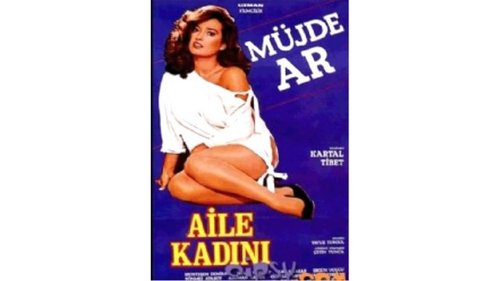
Aile Kadını

Family Woman (Aile Kadını) (translated)

Movie · 1983 · 15 people

Yavuz Turgul wrote the screenplay for Aile Kadını ("Family Woman"), a Turkish drama that Kartal Tibet directed in 1983. Shot in colour on 35 mm, it deals with a marriage built on lies and a past that eventually comes knocking. Uzman Film made it, with Kadir Turgut and Ferit Turgut as producers.

Pınar lives a peaceful life with her wealthy husband Mehmet and their daughter. One day silent phone calls start coming to the house. Soon after, her former lover Emir, a living witness to every mistake she wants to forget, turns up. The order she built on lies is shaken, and Emir slowly manages to work his way into her whole life. Pınar is forced to consider what she would give up to be rid of him. Müjde Ar plays Pınar, Savaş Başar plays Mehmet and Muhteşem Demirağ plays Emir.

Hülya Yiğitalp (Jülide), Sönmez Atasoy (Tansu), Asuman Arsan (Melahat), Burçin Öztunç, Ergün Uçucu, Gökhan Mete and Orhan Çağman (Captain Recep) also appear; colour work was done at Ören Film. The music is by Cahit Berkay, the cinematography by Çetin Tunca and the editing by Mevlüt Koçak. In keeping with the practice of the time, Müjde Ar was dubbed by Ayşin Atav.

DirectorKartal Tibet
Family Woman (Aile Kadını)

Reactions

You can pick up to 3 reactions.

Cast

Müjde Ar Müjde Ar Actor · 72 years old Muhteşem Demirağ Savaş Başar Hülya Yiğitalp Sönmez Atasoy Merih Akalın Asuman Arsan Burçin Öztunç Ergün Uçucu Gökhan Mete Nazli Aydincik Orhan Çağman Actor · 1925 – 1997 Kemal Öztunç Salih Eskicioğlu Ergun Usuca
Through different eyes

Yeşilçam Nostalgic A viewer raised on the classics, looking for warm storytelling and strong acting.

Written by Yavuz Turgul and shaped by Kartal Tibet, this story shows that a people-centred approach was still alive in Turkish cinema of the eighties. The past knocking at the door is a motif Yeşilçam loved; here, though, the issue is less a twist of fate than a woman facing the lies she built herself. That moral centre gives it a depth that asks questions of conscience instead of settling for the floods of tears of older melodramas. For an ear used to the dubbing tradition of the time, the film carries the sound and texture of those years in full.

History & Society Lens Asks about the period, the social background and what the work reflects.

The tension between the title and the story is striking: the peace of Pınar, seen as a 'family woman', depends on hiding her past. The film shows how fragile a woman's respectability was in a wealthy marriage in the early eighties, and how even a former relationship could threaten the whole arrangement. In my view, by placing all the pressure on the woman's shoulders the story both exposes the double standard of its time and partly reproduces it. Anyone watching today who asks why Pınar is so afraid is really questioning the society the film was made in.

Cinephile Looks at script, editing and directing choices; keeps a distance from formula films.

The script builds its tension economically: first silent phone calls and a vague unease, then the threat acquiring a face. That gradual structure pulls the melodrama towards psychological thriller and shows writing that puts character before incident. Kartal Tibet's direction is more conventional; it never fully turns the story's unsettling potential into a visual language and at times gives in to the melodramatic habits of the period. Dubbing the lead actress with another voice, however standard at the time, also weakens the integrity of the performance for a modern viewer. A strong script meeting a mise-en-scène that cannot quite keep up.

These are not reader reviews: they are short editorial takes written from different viewer perspectives with AI assistance. Reader reviews are below.

Reviews (0)

Log in Log in to write a review.

Comments