Serseri Aşık

Vagabond Lover (Serseri Aşık) (translated)

Movie · 1965 · 3 people

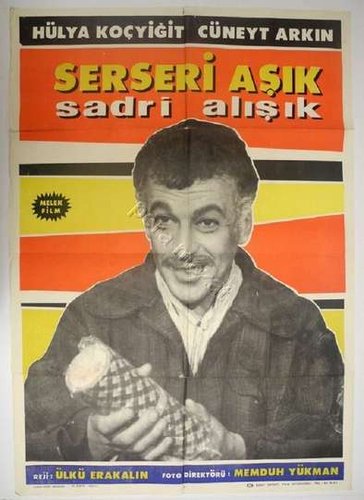
Ülkü Erakalın directed Serseri Aşık, a black-and-white Yeşilçam melodrama from 1965. Bülent Oran wrote the screenplay and Melek Film produced it. The roughly 78-minute picture is regarded as a Yeşilçam take on Charlie Chaplin's Limelight (1952), with the bedridden ballerina Terry replaced by a nightclub singer who loses her voice. Its title also recalls Chaplin's The Tramp, and it was first meant to be called Beni Sever misin.

Hülya Koçyiğit plays Hülya Yıldız, the adored lead singer of the Yıldız Bar. She loves Erol (Cüneyt Arkın), the son of a wealthy businessman played by Hulusi Kentmen, who takes her for a gold-digger and is determined to end the romance. Soon her voice is silenced and she falls into despair. The person who meets her on a bridge is the neighborhood puppeteer who calls himself 'the Doctor', a penniless but kind-hearted drifter played by Sadri Alışık. He takes her into his home; gossip and objections follow, yet she soon becomes the neighborhood's darling. The Doctor secretly loves her and cannot say so. The neighbors collect money so she can sing again, but the cost of the operation is far higher.

Memduh Yükman handled the photography. The film is built around rich-poor love, neighborhood solidarity and self-sacrifice.

DirectorÜlkü Erakalın
Production companyMelek Film
Vagabond Lover (Serseri Aşık)

Reactions

You can pick up to 3 reactions.

Cast

Through different eyes

Yeşilçam Nostalgic A viewer raised on the classics, looking for warm storytelling and strong acting.

One of the films that shows Sadri Alışık at his warmest. The puppeteer known as the "Doctor", penniless but rich of heart, is played with such sincerity that his inability to declare his love leaves a lump in the throat. Hülya Koçyiğit carries the despair of a singer who has lost her voice with real delicacy, and Cüneyt Arkın suits the rich man's son. Though inspired by Chaplin's Limelight, the story becomes entirely our own through the solidarity of the neighbourhood. In its black-and-white frames, the Yeşilçam where kindness and sacrifice still counted as heroism comes back to life.

History & Society Lens Asks about the period, the social background and what the work reflects.

Serseri Aşık sets two worlds of mid-1960s city life against each other: on one side a wealthy businessman determined to keep his son away from a nightclub singer, on the other a neighbourhood that lives together through both gossip and solidarity. The father's assumption that the singer is after money clearly reflects the period's prejudice against women who performed on stage. The neighbours first objecting, then embracing the young woman and collecting money for her operation looks like an idealised picture of a safety net built by neighbourliness rather than the state. The rich-poor contrast is a little schematic: the wealthy are cold, the poor kind-hearted. Still, this idea of solidarity helps explain why audiences of the time were so attached to such stories.

Action & Thriller Fan Puts pace, tension and set pieces first; little patience for slow drama.

Let's be honest: this is pure melodrama, and the pace matches. A singer who loses her voice, an unspoken love, a neighbourhood passing the hat; not much here if you want thrills. But Sadri Alışık's character holds the film together, and the love he keeps hidden creates a bit of tension. At around 78 minutes it doesn't drag. A short way in if you want to warm up to older films.

These are not reader reviews: they are short editorial takes written from different viewer perspectives with AI assistance. Reader reviews are below.

Reviews (0)

Log in Log in to write a review.

Comments