Oh Beautiful Istanbul (Ah Güzel İstanbul)

Oh Beautiful Istanbul (Ah Güzel İstanbul) (translated)

Movie · 1966 · 18 people

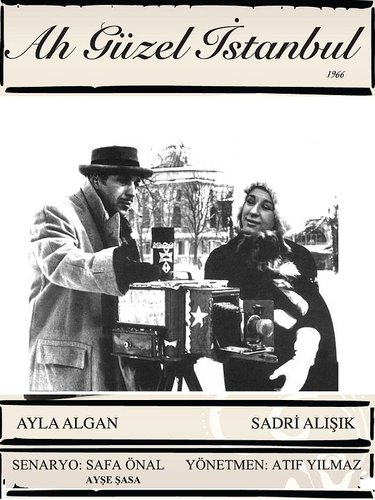
Turkish black comedy Ah Güzel İstanbul (Oh Beautiful Istanbul) was made in 1966 in black and white and runs 97 minutes. It was directed by Atıf Yılmaz from a screenplay by Safa Önal and Ayşe Şasa, with Sadri Alışık and Ayla Algan in the leading roles. Through a love story it examines Turkey's alaturka-alafranga clash, putting Turkish music at the center of that tension.

The story has two strands. Ayşe is a young girl who runs away from her home in İzmir to Istanbul, hoping to earn easy money and become an "artist". Haşmet İbriktaroğlu is an old Istanbulite who has squandered the fortune left by his father and now earns his living as a street photographer. Their paths cross. Runaway girls dreaming of fame were a familiar figure in 1960s cinema, with Istanbul shown as salvation for outsiders, and Ayşe is a window onto those realities. The film emphasizes traditional values, love and friendship while criticizing the imitation of the West.

Keeping the Yeşilçam tradition of a happy ending, the film closes on the message that hope and trust always exist. Gani Turanlı shot it and Metin Bükey composed the music. It was awarded the "Silver Tree" at the 10th Bordighera International Humor Film Festival.

DirectorAtıf Yılmaz

Reactions

You can pick up to 3 reactions.

Cast

Through different eyes

Yeşilçam Nostalgic A viewer raised on the classics, looking for warm storytelling and strong acting.

With Atıf Yılmaz behind the camera, Safa Önal and Ayşe Şasa writing, and Sadri Alışık and Ayla Algan in the leads, the result is one of Yeşilçam's most graceful black comedies. An old Istanbul gentleman who has squandered his inheritance and fallen to street photography is a character who makes you smile and ache at once, a role made for Sadri Alışık's melancholy humor. A story that puts Turkish music at its heart, along with Metin Bükey's score, carries the sound of a city that has since vanished. With its ending that never lets go of hope and trust, it is a fine example of the old masters' heartfelt cinema.

History & Society Lens Asks about the period, the social background and what the work reflects.

Ah Güzel İstanbul takes on one of the liveliest debates of the 1960s, the clash between alaturka and alafranga, through a love story and Turkish music. The girl who runs away from İzmir dreaming of becoming an "artist" in Istanbul was a familiar figure in the cinema of the time, and a story that presents the city as salvation for outsiders carries the anxieties of internal migration and rapid urbanization. The old Istanbulite who has squandered his fortune stands for an old order coming apart. Seen from today, though, the film's critique of imitating the West feels somewhat one-sided; the wish to preserve tradition can tip into a tone suspicious of change itself.

Cinephile Looks at script, editing and directing choices; keeps a distance from formula films.

Being a black-comedy experiment within a Yeşilçam output dominated by melodrama and broad comedy makes the film interesting in itself. Atıf Yılmaz tries to build an ironic tone by tying two separate storylines together, and the Silver Tree award at the 10th Bordighera International Humor Film Festival shows that the tone found an audience abroad. Yet there is a clear compromise between the sharpness of black comedy and Yeşilçam's happy-ending tradition: the irony gradually makes way for an optimistic message, and the film doesn't carry the genre's edge all the way through. Gani Turanlı's black-and-white photography, meanwhile, captures the city with an eye both romantic and detached.

These are not reader reviews: they are short editorial takes written from different viewer perspectives with AI assistance. Reader reviews are below.

Reviews (0)

Log in Log in to write a review.

Comments