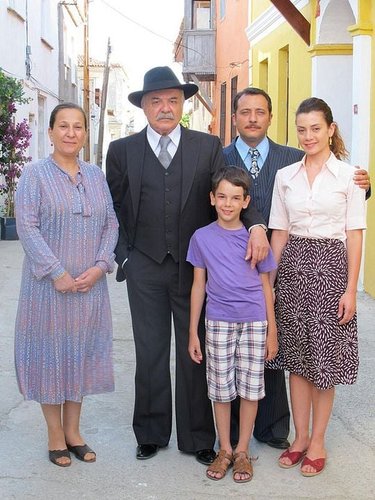
My Grandfather's People (Dedemin İnsanları)

My Grandfather's People (Dedemin İnsanları) (translated)

Movie · 2011 · 12 people

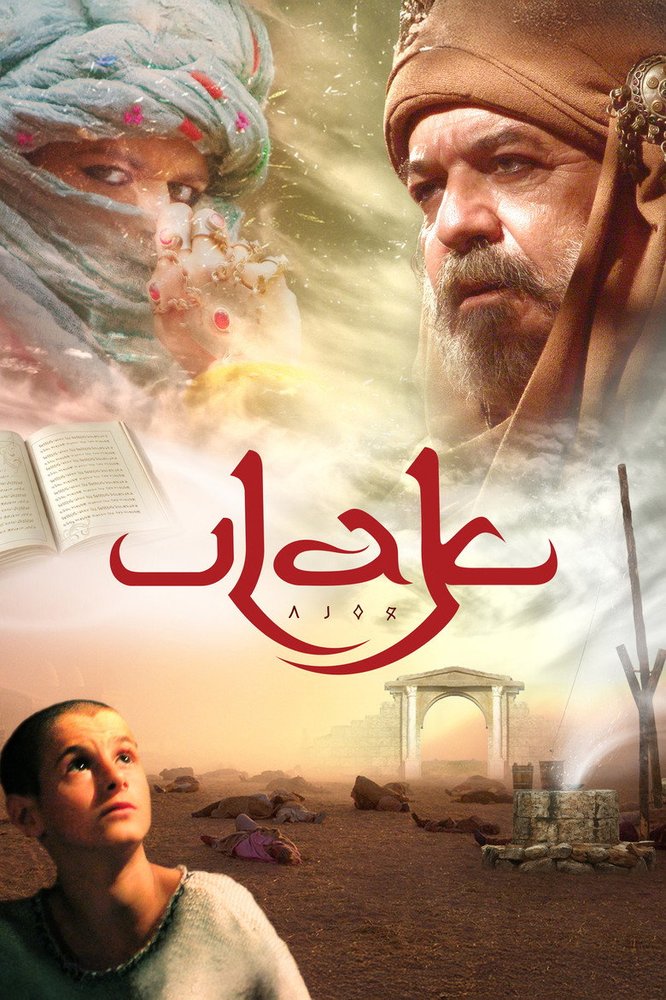
Çağan Irmak wrote and directed Dedemin İnsanları (My Grandfather's People), a drama released in Turkish cinemas on November 25, 2011. Billed as a comedy-drama, melodrama or historical drama, it uses a child and his grandfather to tell of the change a family and a country went through. It revisits the emotional ground of Irmak's Babam ve Oğlum. Most Production and Ay Yapım made it; it runs 123 minutes.

The story circles around Ozan, a ten-year-old living with his large family in a small Aegean seaside town. His family is of Cretan origin, so the other children call him "gavur". Afraid of being left alone, he defies his family, insisting "We are Turks!" Mehmet Bey (Çetin Tekindor), a respected, helpful figure in town, is saddened by the boy's anger. Forced out of Crete for İzmir at just seven during the population exchange, Mehmet Bey tells his grandson about the land he lost and the longing inside him by setting bottles with letters afloat on the Aegean. Ushan Çakır plays the adult Ozan.

Gökhan Tiryaki shot it, and the music is by Cenk Erdoğan, Bora Ebeoğlu and Aria.

DirectorÇağan Irmak
Production companyMost Production

Reactions

You can pick up to 3 reactions.

Cast

Through different eyes

Yeşilçam Nostalgic A viewer raised on the classics, looking for warm storytelling and strong acting.

Çağan Irmak returns to the emotional vein of Babam ve Oğlum, this time through the wound of the population exchange. Çetin Tekindor's Mehmet Bey carries the longing of a man torn from Crete at seven with a dignified calm, and the bottles with letters set afloat on the Aegean recall the simple, poetic images of the old masters. Young Ozan's defiant "We are Turks!" captures, with real feeling, the quiet ache between identity and belonging. For eyes raised on the classics, reading a country's transformation through the story of a grandfather and his grandson is a genuine treat.

History & Society Lens Asks about the period, the social background and what the work reflects.

Dedemin İnsanları approaches the population exchange through one family's daily life rather than grand historical narrative. Its most striking detail is a Cretan-origin family's child being called "gavur", an infidel, in an Aegean town: a plain way of showing that those who arrived through migration could long be treated as outsiders even in their new homeland. Ozan turning his back on his family to escape that label is a sharp observation on how identity can be imposed from outside. Because the film weaves past and present together, it is also about what one generation passes to the next. Since the history is folded into a family story, though, anyone wanting to understand the exchange in depth should treat the film as a starting point.

Cinephile Looks at script, editing and directing choices; keeps a distance from formula films.

It is no accident that sources variously call Dedemin İnsanları a comedy-drama or a melodrama; the film never quite settles between the two tones. The emotional steering familiar from Çağan Irmak's Babam ve Oğlum is at work here too: the peaks are underlined with music and lingering looks, leaving the viewer little room to arrive at the feeling on their own. At 123 minutes, the shifts between past and present also drag in places. Even so, Çetin Tekindor's restrained performance and the warm texture Gökhan Tiryaki's camera gives the Aegean town carry the film. The letters placed in bottles are the script's most elegant and most cinematic idea.

These are not reader reviews: they are short editorial takes written from different viewer perspectives with AI assistance. Reader reviews are below.

Reviews (0)

Log in Log in to write a review.

Comments