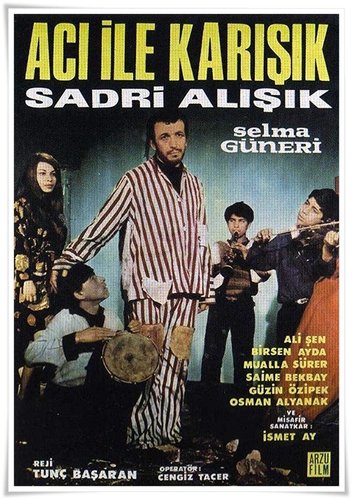
Acı İle Karışık

Mixed with Bitterness (Acı İle Karışık) (translated)

Movie · 1969 · 6 people

Tunç Başaran directed Acı İle Karışık ("Mixed with Bitterness"), a black-and-white Yeşilçam film from 1969. Combining sentimental drama with comedy, it tells of people in a poor Istanbul neighbourhood who never lose hope despite having no money. The film runs about 94 minutes, was made by Arzu Film, and stars Sadri Alışık.

Alışık plays Osman, who earns a living singing in the neighbourhood streets with three boyhood friends: Yırtık on violin, Pırtık on darbuka and Avare on clarinet. The neighbours love them, but money is scarce. Osman's sweetheart Müjgan (Selma Güneri) lives on the same street with her ailing father, while the butcher Turgay (Ali Şen) has set his heart on her. One day they wander into a wealthy district. The society woman Necla (Saime Bekbay) is taken with Osman's voice and wants to make him a famous singer. Osman tires of the luxury; his heart is with Müjgan. When Necla's jealous former lover Ahmet (Kayhan Yıldızoğlu) gets involved, matters turn into a serious criminal case. Birsen Ayda plays Ayla.

Tunç Başaran, Sadık Şendil and Ahmet Üstel wrote the screenplay, Nahit Ataman produced, and Cengiz Tacer was cinematographer. The film is remembered among the period's neighbourhood stories that blend class differences with humour and heartfelt melodrama.

DirectorTunç Başaran
Production companyArzu Film

Reactions

You can pick up to 3 reactions.
Cast

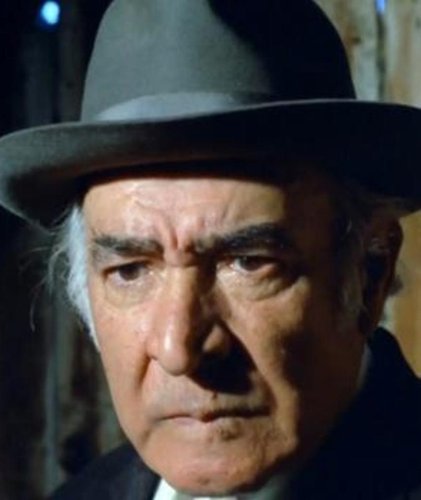
Sadri Alışık Actor · died at 69 Selma Güneri Birsen Ayda Ali Şen Ali Şen Actor · died at 70 Mualla Sürer Saime Bekbay

Through different eyes

Yeşilçam Nostalgic A viewer raised on the classics, looking for warm storytelling and strong acting.

Acı İle Karışık is one of Yeşilçam's warm neighbourhood films: people with empty pockets and full hearts, a violin, a darbuka and a clarinet playing in the street. To my mind its heart beats in the music; a young man who earns his keep singing folk songs on the corner is one of this cinema's best-loved heroes. Sadri Alışık's warm, man-of-the-people screen presence suits Osman perfectly. The theme of a heart that stays in the old neighbourhood despite the lure of wealth is familiar, but in Yeşilçam that familiarity is not a flaw, it is a promise: a reminder of what kindness is worth.

History & Society Lens Asks about the period, the social background and what the work reflects.

The film maps the sharp class divide of late-sixties Istanbul onto a meeting between a poor neighbourhood and a society district. Street musicians being drawn into the world of the rich by the promise of fame also mirrors a common dream of those years about the city and the stage. Even so, like many films of its time, the story leans on a schematic pattern: poverty goes with virtue, wealth with stifling luxury. For today's viewer, that pattern is the interesting part in itself; it is a good case study in how Yeşilçam saw social inequality and what kind of consolation it offered its audience.

Family Viewer Asks whether the whole household can watch it; cares about humour and heart.

It looks like an old film the whole family can watch, mixing comedy with sentimental drama. One caution, though: as the story goes on, jealousy enters the picture and things turn into a serious criminal case. Young children may find that part heavy. It's a nice choice for watching with grandparents, or for families who love old songs and neighbourhood life.

These are not reader reviews: they are short editorial takes written from different viewer perspectives with AI assistance. Reader reviews are below.

Reviews (0)

Log in Log in to write a review.

Comments