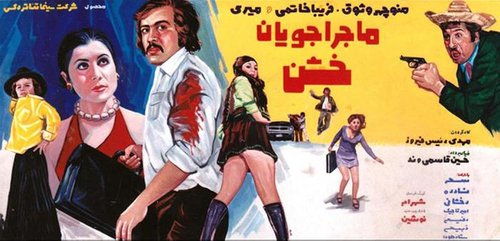
Yusuf ile Züleyha

Yousof va Zolaykha

Movie · 1968 · 6 people

Yusuf ile Züleyha ('Joseph and Zuleikha') is a Turkish-Iranian co-production, a historical romance drawn from the scriptural story of Joseph. In Turkey it was released by Erler Film, billed on its posters with the subtitle Hazreti Yusuf and advertised as a colour CinemaScope picture. Cüneyt Arkın plays Yusuf and Füruzan plays Züleyha, alongside Iranian performers including Taghi Zohouri, Ali Zandi, Dariush Talayi and Mohammad Abdi.

The credits differ from source to source. Iranian records place the film in 1347 (1968) and name Mehdi Reisfirooz as director and Ebrahim Zamani Ashtiani as screenwriter, while Turkish catalogues and the period posters give a 1970 release, credit Esmail Kushan (Dr. E. Koushan) as director and Mahmoud Kushan as cinematographer. Shooting took place in Iran and the film was prepared in both Persian and Turkish; its running time is given as anywhere between 90 and 102 minutes.

The story follows Yusuf, envied by his brothers and left in a well, carried on to Egypt by a passing caravan. There Züleyha falls in love with him; when he refuses her, a false accusation sends him to prison. His reading of the Pharaoh's dream restores his standing and he rises to govern Egypt. During the years of famine he recognises the brothers who come to beg for grain, and sends his shirt to his father Yakup, who has gone blind from weeping. The film closes with Yakup's sight restored and Yusuf reunited with Züleyha.

The picture drew large audiences in Iran on release, finishing the 1347 season as the second highest-grossing film after Soltan-e Ghalbha.

DirectorMehdi Reisfirooz
Production companyErler Film

Reactions

You can pick up to 3 reactions.

Cast

Through different eyes

Yeşilçam Nostalgic A viewer raised on the classics, looking for warm storytelling and strong acting.

The story of Joseph is one of the finest tales passed down through the generations, bringing jealousy, patience and loyalty together in one narrative. It is interesting to see Cüneyt Arkın this time as a hero who stands out for his patience rather than his sword. Füruzan's Züleyha carries the pain of an unrequited love. The joint work of Turkish and Iranian filmmakers recalls the spiritual heritage the East shares. The colour CinemaScope images must have promised audiences of the day a real feast. Built on brotherhood and a father's longing for his son, the story still touches the heart.

Family Viewer Asks whether the whole household can watch it; cares about humour and heart.

Drawing on the story of Joseph from the holy scriptures, this film is a nice choice to watch with the grandparents. It carries worthwhile messages about jealousy between brothers, patience and loyalty. However, Züleyha's unrequited love and the false accusation may be hard subjects to explain to young children. Being an old production, it may also feel slow to children today. With school-age kids, it works best if you tell them the story beforehand.

Cinephile Looks at script, editing and directing choices; keeps a distance from formula films.

Assessing Yusuf ile Züleyha first means untangling its credits: Iranian records name Mehdi Reisfirooz as director and date it to 1968, while Turkish sources and posters name Esmail Kushan and give 1970; even the running time varies between 90 and 102 minutes. That uncertainty may bear the marks of an era when co-productions circulated in different versions. The film spreads the story across a wide span, from the well to the dungeon, from the reading of a dream to the years of famine; fitting so many events into one film reduces the narrative at times to a string of incidents, and the emotional peaks do not get enough room to breathe. Shooting in colour CinemaScope was an ambitious visual choice for its time. Its strong box-office showing in Iran comes as no surprise.

These are not reader reviews: they are short editorial takes written from different viewer perspectives with AI assistance. Reader reviews are below.

Reviews (0)

Log in Log in to write a review.

Comments